Hyper-SD XL: one-to-eight-step SDXL with a flexible LoRA
Topic: Models

By Captain
Published 2026-10-02
Hyper-SD from ByteDance accelerates SDXL checkpoints to as few as one step. Learn which variant to pick, the CFG and sampler rules, and how to combine it with checkpoints and LoRAs without losing quality.
Overview
Hyper-SD is ByteDance's trajectory-segmented consistency distillation. As a
LoRA
it attaches to any
SDXL
checkpoint
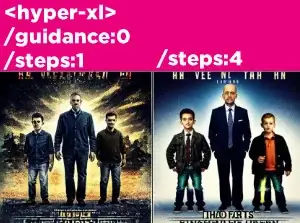
and makes it converge in 1, 2, 4 or 8 steps. The catalog's hyper-xl entry is tuned to raise generation speed dramatically while keeping the checkpoint's style.
Compared with SDXL-Lightning, Hyper-SD has a CFG-preserving variant that tolerates a guidance scale of 3-5, which keeps
negative prompts
useful.
Reference
Name | Type | What it is |
|---|---|---|
LoRA weight | 0.8-1.0 | 1.0 for the plain variant; 0.8 can soften over-sharpening when stacking LoRAs. |
Steps | 1-8 | |
CFG | 1 or 3-5 | 1 for the standard LoRA; 3-5 for the CFG-preserving variant. |
Sampler | Euler / TCD | Euler with sgm_uniform at 4-8 steps; TCD for 1-2 steps with eta 0.3. |
Resolution | 1024 | Standard SDXL sizes. |
AD

No install required - run AI models on the cloud
BitVector Prism is the easiest way to start: pick a model, type a prompt and generate in a clean web app, with nothing to configure. BitVector is also available on Discord and on the web (SpyGlass).
Step by step
- Attach Hyper-SD XL at 1.0 to your SDXL checkpoint.
- Choose 8 steps, Euler, sgm_uniform, CFG 1 for your first run.
- If you need a negative prompt to work, switch to the CFG-preserving variant and set CFG to 4.
- Add your style or character LoRAs at 0.6-0.8.
- Use the 1-step variant only for live previews; move to 4-8 steps for anything you keep.
Examples
Realistic checkpoint, 8 steps
candid photo of a street violinist in a snowy square, warm string lights, shallow depth of field, Fujifilm color
Hyper-SD XL 1.0, 8 steps, CFG 1, Euler, sgm_uniform
CFG-preserving with a negative prompt
illustration of a greenhouse full of carnivorous plants, botanical plate style, soft watercolor
Negative: text, frame, border. Hyper-SD XL CFG variant 1.0, 8 steps, CFG 4
Creative idea: live sketch loop
loose charcoal sketch of a dancer mid-turn, gestural lines, white paper
1-step variant with TCD for live preview, then 8 steps for the keeper
Tips
- Hyper-SD keeps more of the checkpoint's color grading than Lightning; it is the better choice for stylized models.
- At 8 steps you can run hires fix at 0.35 denoise for a clean 2048 image in seconds.
- Two acceleration LoRAs never belong in the same graph.
- If detail looks smeared, raise steps before raising CFG.
Troubleshooting
Flat, washed-out image at 1 step
Why it happens
Wrong sampler for the 1-step variant.
How to fix it
Use TCD with eta 0.3 for 1-2 steps, or move to the 4-step variant with Euler.
Negative prompt is ignored
Why it happens
Standard variant at CFG 1.
How to fix it
Use the CFG-preserving variant at CFG 3-5.
AD

No install required - run AI models on the cloud
PirateDiffusion is Telegram only and built for pros: thousands of models, LoRAs and workflows driven by chat commands, with unlimited generation on a fixed price plan.

Questions
Hyper-SD or Lightning?
Both are excellent. Lightning is slightly sharper at 4 steps; Hyper-SD keeps style and lets you keep CFG.
Does it work with Pony checkpoints?
Yes. Expect the score_ tags to behave normally; use 8 steps for detailed scenes.
Links and sources
Models in this guide
Written by
Captain
Related guides
Models
SDXL-Lightning: four-step generation on any SDXL checkpoint
ByteDance's SDXL-Lightning LoRA turns a 30-step SDXL render into a 4-step one. Learn the step counts, the CFG you must use, the sampler, and how to combine it with your favorite checkpoints and style LoRAs.
By Captain
2026-09-30
Models
Smooth Detail Booster: cleaner shading and more detail on Illustrious and Pony
DigitalPastel's Smooth Detail Booster LoRA adds detail and smooth shading to anime checkpoints without changing the art style. Learn the weight range, the prompts that help it, and how to pair it with quality tags.
By Captain
2026-09-29

Models
Playground v2 1024 Aesthetic: a second opinion to SDXL
Playground v2 is an SDXL-architecture model trained from scratch for aesthetics. Learn how it differs from SDXL, its CFG and step preferences, and the painterly and realistic prompts where it beats the original.
By Captain
2026-10-02

Models
Stable Diffusion XL 1.0: prompts, settings and what it still does best
How to get the most out of the official SDXL 1.0 base model: native resolutions, CFG and sampler settings, the refiner, negative prompts and ideas for styles where SDXL still shines.
By Captain
2026-10-01
More guides
Models
FLUX.1 Dev: how to prompt it, best settings and creative ideas
A practical guide to FLUX.1 Dev by Black Forest Labs: natural-language prompting, guidance and step settings, LoRA stacking, text rendering and prompt ideas that play to its strengths.
By Captain
2026-09-30

Models
Stable Diffusion 1.5: the classic model, prompted properly
Stable Diffusion 1.5 is still worth knowing: the right resolution, CFG and sampler, how to use its huge library of LoRAs and embeddings, and creative prompt ideas suited to a 512-pixel model.
By Captain
2026-10-02

Models
FLUX.2 Dev: prompting the newest Black Forest Labs model
FLUX.2 Dev brings larger prompts, better text, stronger realism and multi-reference editing. This guide covers the turbo workflow, guidance and resolution settings, prompt structure and ideas that use its new strengths.
By Captain
2026-10-03

Models
Qwen-Image: long prompts, perfect text and bilingual posters
Qwen-Image is the model to reach for when the words in the picture matter. Learn how to write its long descriptive prompts, render English and Chinese text accurately, set CFG and steps, and explore layout-heavy creative ideas.
By Captain
2026-09-29
ComfyUI
ComfyUI nodes: documentation and troubleshooting
Plain-language documentation for the ComfyUI nodes people use most: what each node does, every input and output, how to wire it, the settings that matter, and the errors it throws with the fix for each one.
By Captain
2026-06-02
Models
Waifu Diffusion: Danbooru-tag prompting for a classic anime model
Waifu Diffusion is the anime base model that taught a generation how to prompt with Danbooru tags. This guide covers tag order, quality tags, negatives, the right resolution and ideas for clean anime illustrations.
By Captain
2026-10-01

Model
Trends
.ai
© ModelTrends.ai
|
Made in Japan
|
© 2026